
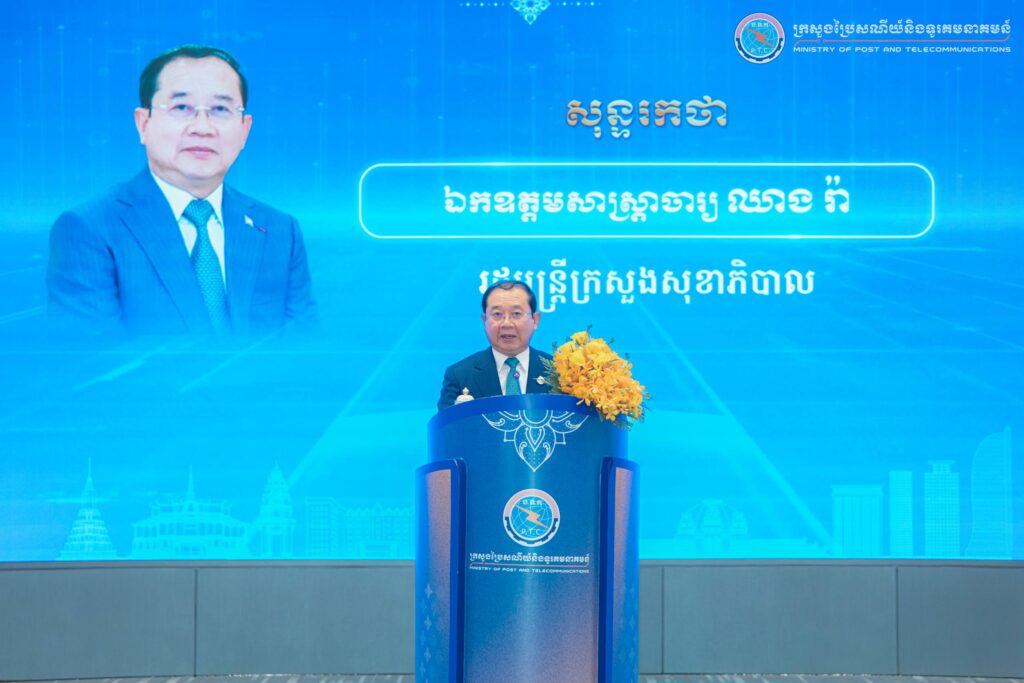
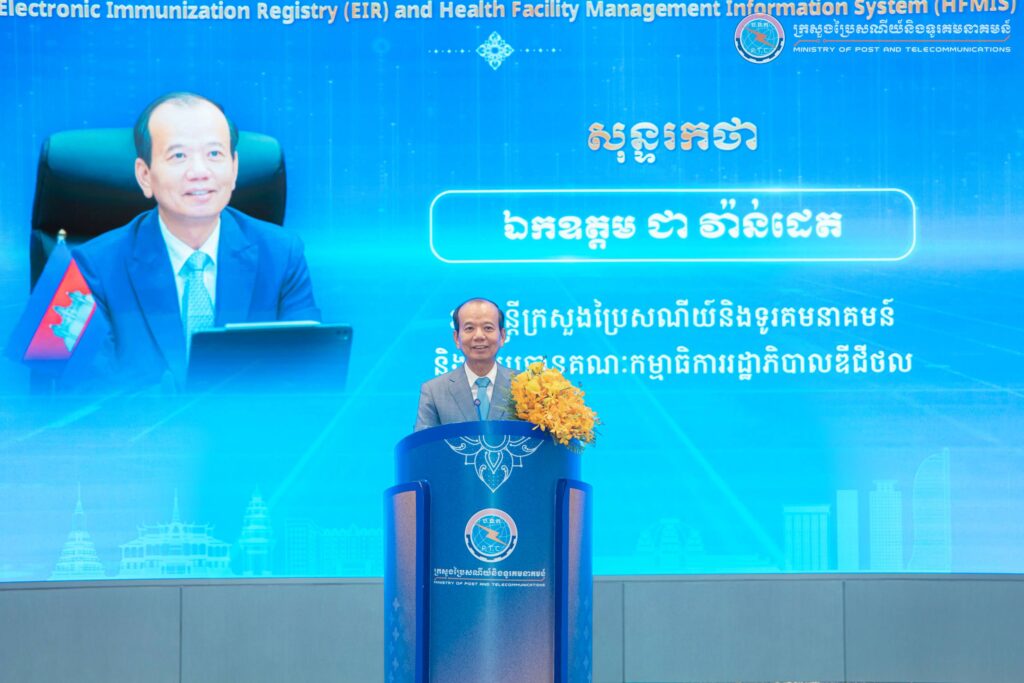
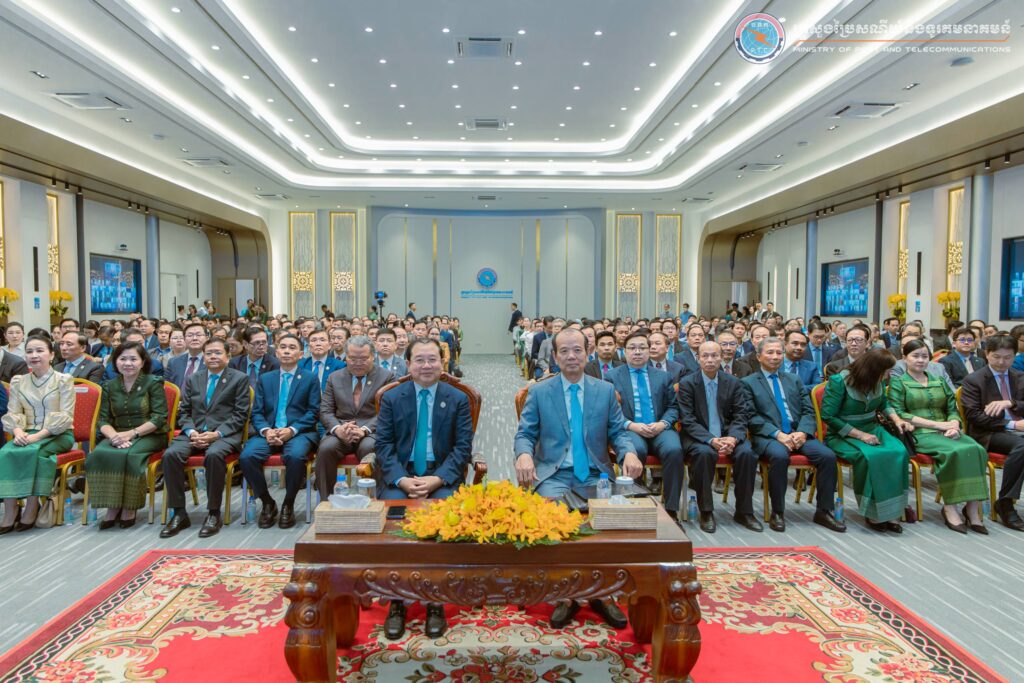
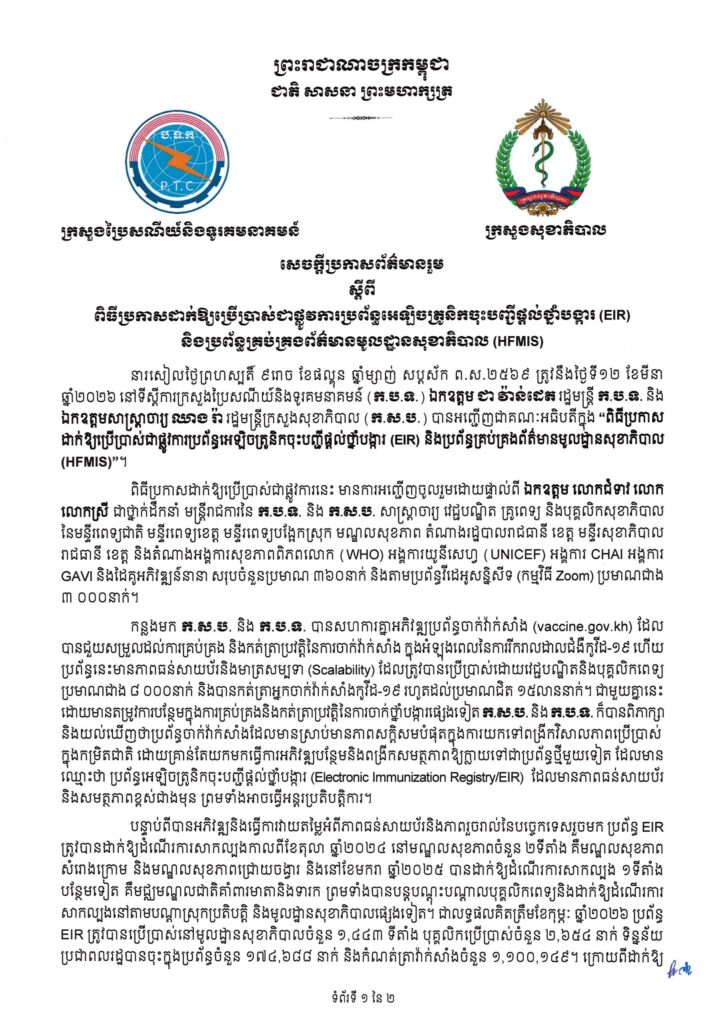
On the afternoon of March 12, 2026, at the Ministry of Post and Telecommunications (MPTC), His Excellency Chea Vandeth, Minister of Post and Telecommunications, and His Excellency Professor Chheang Ra, Minister of Health (MOH), presided over the “Launching Ceremony of Electronic Immunization Registry (EIR) and Health Facility Management Information System (HFMIS).”
The launching ceremony was attended by senior leaders and civil servants from the MPTC and MOH; professors; medical doctors; healthcare professionals; and health workers from national hospitals, provincial hospitals, referral hospitals, and health centers; as well as representatives from municipal and provincial administrations, municipal and provincial health departments, and development partners, including the World Health Organization (WHO), UNICEF, CHAI, and GAVI—bringing together approximately 360 participants who attended in person, while more than 3,000 participants joined virtually via Zoom.




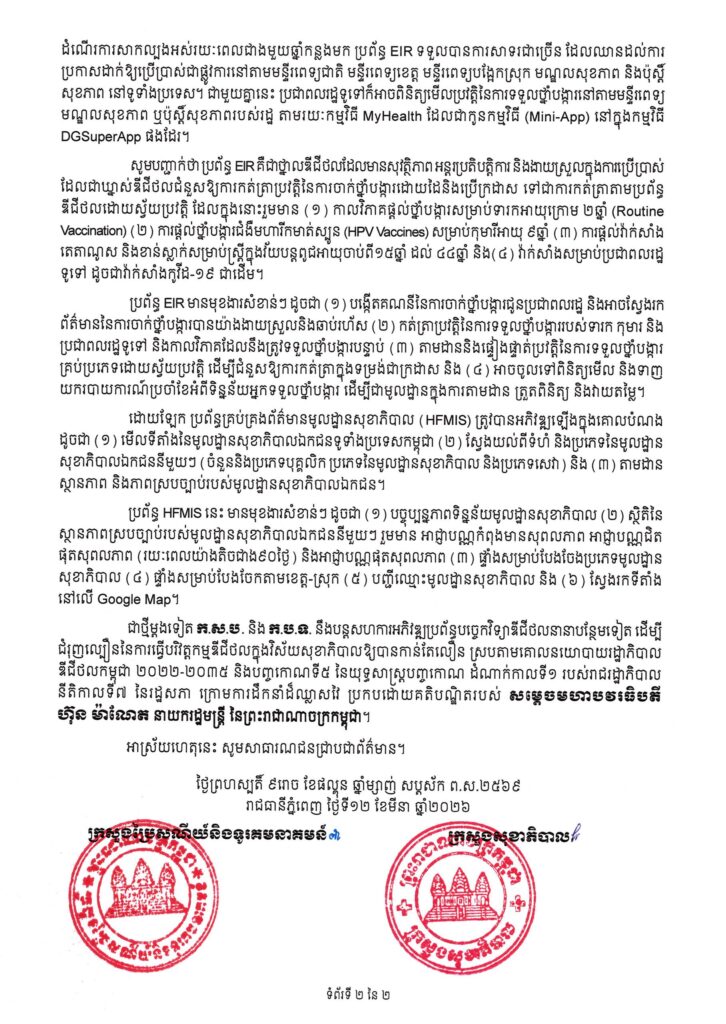
Previously, the MOH and MPTC collaborated to develop the national vaccination management system (vaccine.gov.kh), which significantly facilitated the management and documentation of vaccination records during the COVID-19 pandemic. The platform demonstrated strong cybersecurity resilience and scalability, supporting more than 8,000 doctors and healthcare workers and recording vaccination data for nearly 15 million individuals. Given the growing need to manage and track other immunization records, the two ministries discussed and agreed that the existing vaccination system could be expanded for nationwide use by further enhancing and upgrading the platform into a new system known as the Electronic Immunization Registry (EIR), which offers stronger cybersecurity resilience, improved performance, and interoperability capabilities.
Following the development and cyber resilience and technical readiness assessments, the EIR system was piloted in October 2024 at two health centers—Samraong Kraom Health Center and Chroy Changvar Health Center; and in January 2025, the pilot was expanded to the National Maternal and Child Health Center. Additionally, there was training provided for healthcare personnel, and the pilot was gradually extended to operational districts and other health facilities. As of February 2026, the EIR system had been implemented at 1,443 health facilities, with 2,654 active users; and the system recorded data for 174,688 citizens and documented 1,100,149 vaccination records. After more than one year of pilot implementation and positive feedback, the EIR system has now been officially launched across national hospitals, provincial hospitals, referral hospitals, health centers, and health posts across the country. In addition, citizens can easily check their vaccination history received at public hospitals, health centers, or health posts through the MyHealth mini-app, available within the DG SuperApp.
It is worth noting that the Electronic Immunization Registry (EIR) system is a secure, interoperable, and user-friendly digital platform that serves as a digital enabler to replace manual, paper-based vaccination records with automated digital documentation. The system supports several immunization programs, including (1) routine vaccination schedules for children under two years of age; (2) Human Papillomavirus (HPV) vaccines for nine-year-old girls; (3) tetanus and diphtheria vaccinations for women aged 15 to 44; and (4) vaccinations for the general citizens, including those for COVID-19.
The key features of the EIR system include the following: (1) creating individual immunization accounts for citizens and enabling easy and quick access to vaccination information; (2) recording vaccination histories for infants, children, and the general citizens, as well as tracking upcoming immunization schedules; (3) automatically monitoring and verifying vaccination records across all vaccine types, replacing paper-based documentation; and (4) allowing users to view and download monthly reports on immunization data to support monitoring, supervision, and evaluation.
Meanwhile, the Health Facility Management Information System (HFMIS) was developed to enable users to (1) explore the locations of private health facilities across Cambodia; (2) access detailed information on the size and types of private health facilities (staffing, facility categories, and services offered); and (3) review the operational and legal status of private healthcare facilities.
The key features of the HFMIS system include (1) updating health facility data; (2) providing statistics on the legal status of private health facilities, including valid licenses, licenses nearing expiration (within 90 days), and expired licenses; (3) dashboards categorizing facilities by type; (4) dashboards organizing facilities by province and district; (5) a searchable list of healthcare facilities; and (6) exploring the locations on the Google Map.
Moving forward, the MOH and MPTC will continue to collaborate in developing additional digital systems to accelerate digital transformation in Cambodia’s health sector in line with the Cambodia Digital Government Policy 2022–2035 and the fifth priority of the Pentagonal Strategy—Phase I of the Royal Government under the wise leadership of Samdech Moha Borvor Thipadei Hun Manet, Prime Minister of the Kingdom of Cambodia.
As outlined above, the general public is hereby informed accordingly.
#MOH#posts#telecommunications#digital#MPTC#GoDigitalCambodia#Cambodia