
Phnom Penh: On the afternoon of March 20, 2026, His Excellency Liv Sophanarith, Secretary of State of the Ministry of Post and Telecommunications (MPTC), presided over the closing ceremony of the “Cybersecurity Workshop for Digital Government 2026,” which was attended by technology officials from 36 ministries and institutions, brought together approximately 115 participants, and was held at the Phnom Penh Hotel.
The workshop was held from March 18 to March 20, 2026, as part of the cooperation to build a resilient digital government by enhancing awareness of cybersecurity risks, strengthening protection capabilities, and improving preparedness to respond to cyber threats associated with the use of emerging technologies. The workshop focused on several key topics, including (1) digital literacy and government readiness; (2) understanding threats related to artificial intelligence (AI) and deepfake technologies; (3) protecting government information in the digital era; and (4) practicing effective cyber hygiene in daily operations.
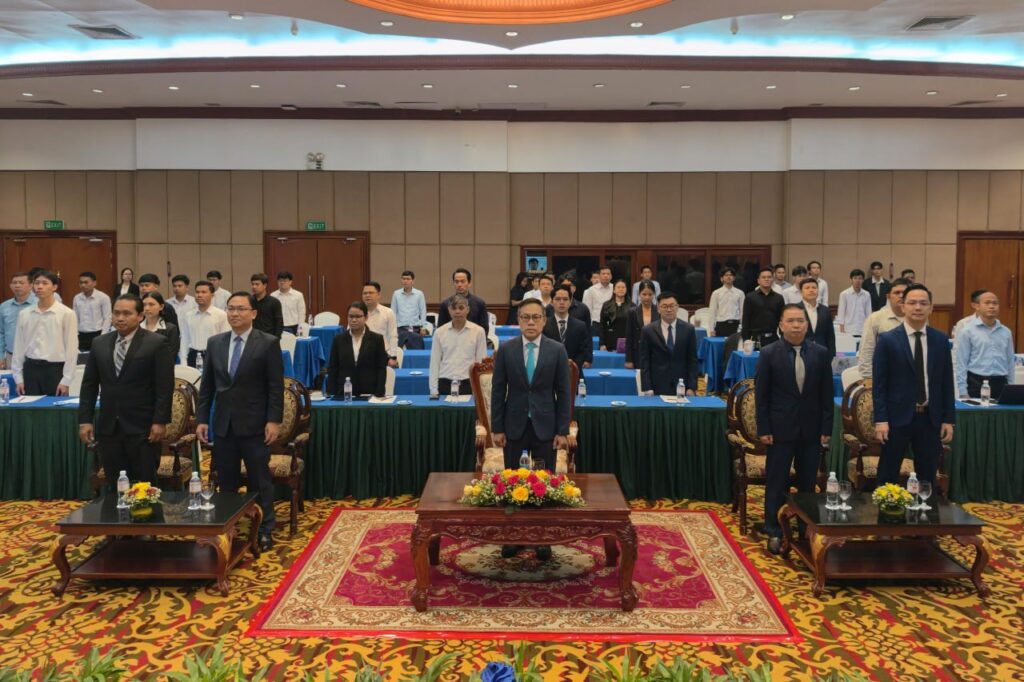
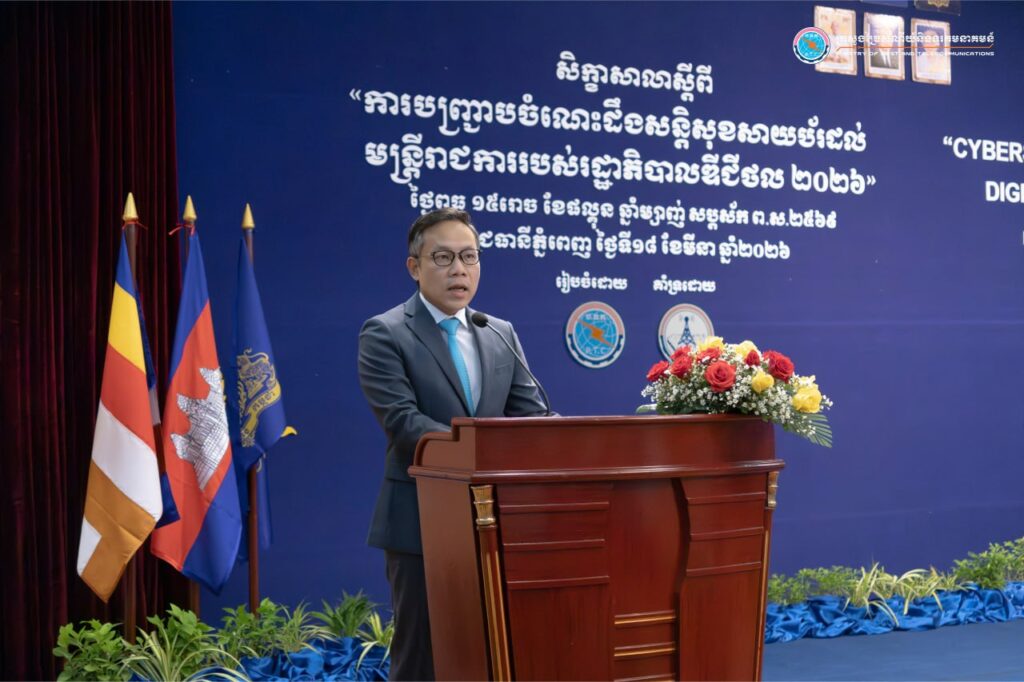
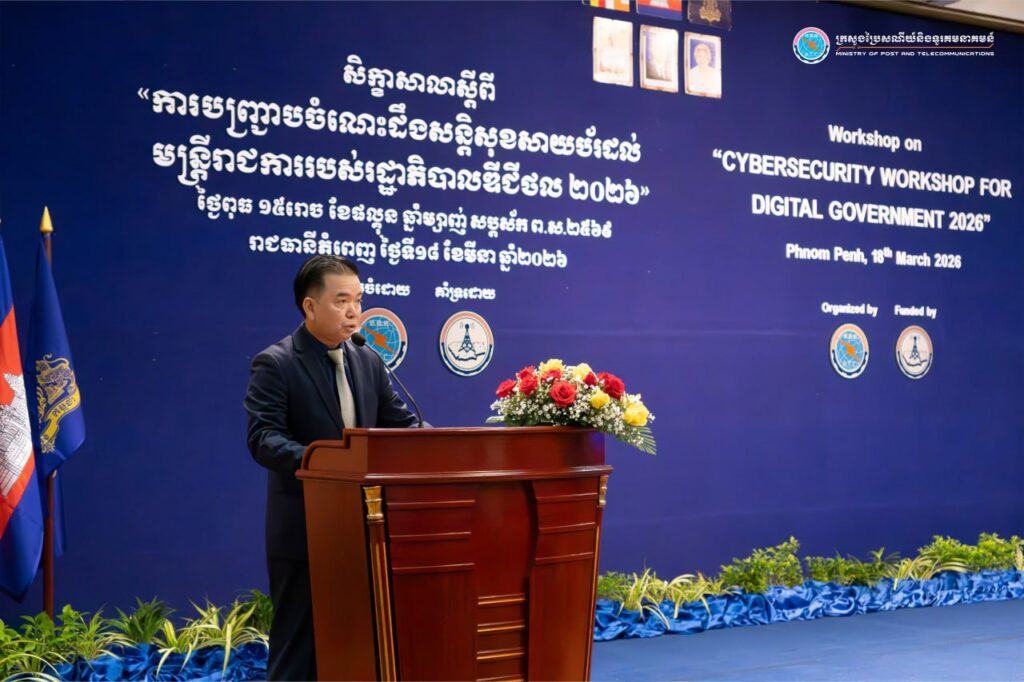
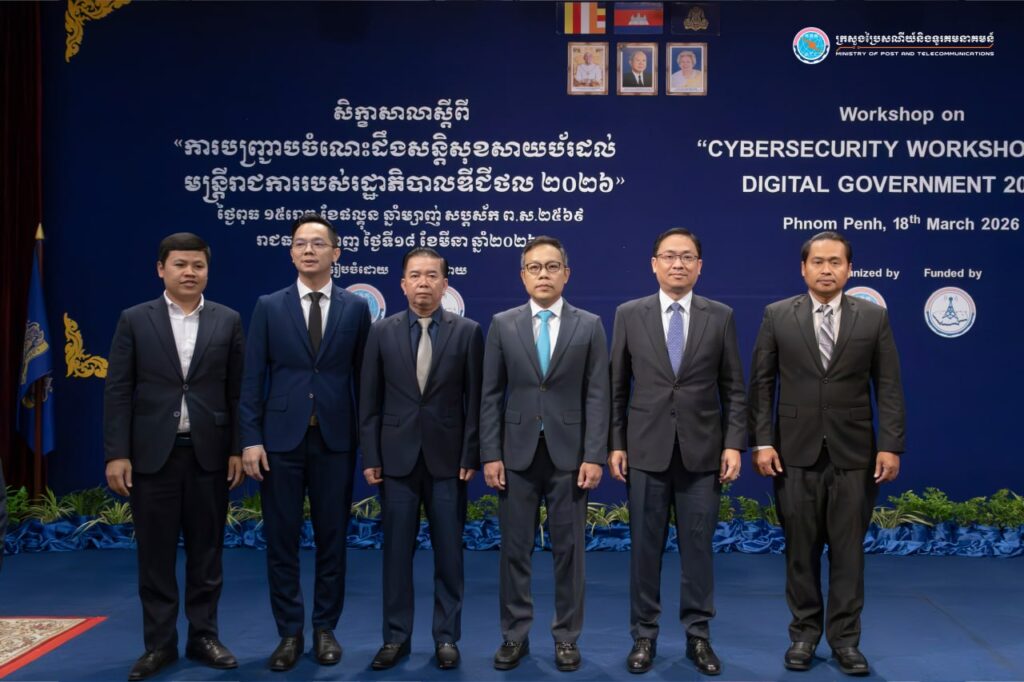
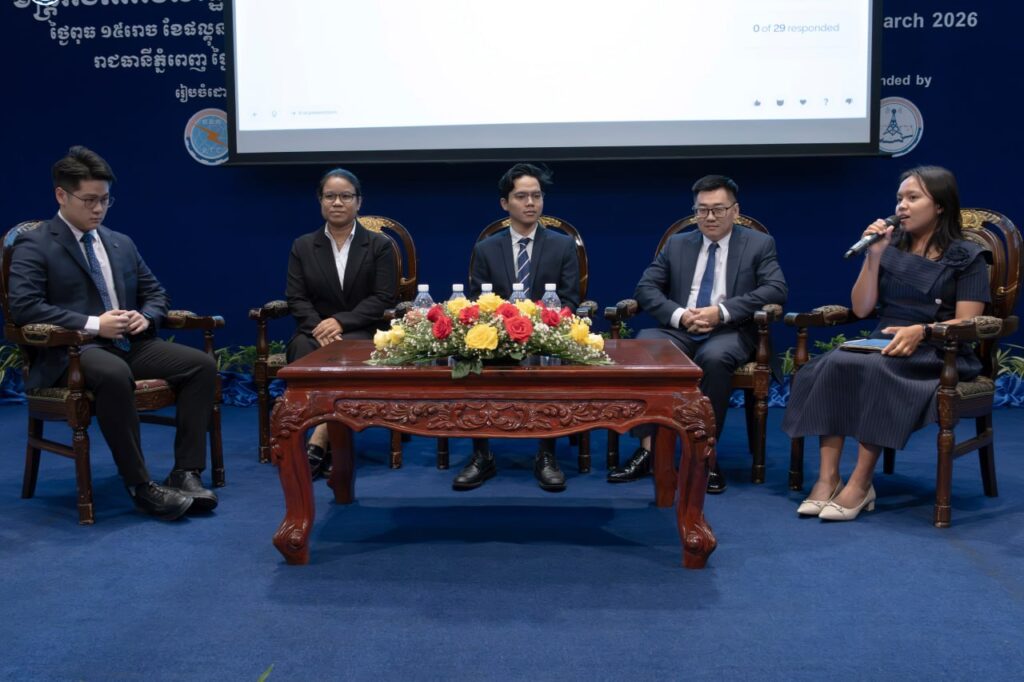
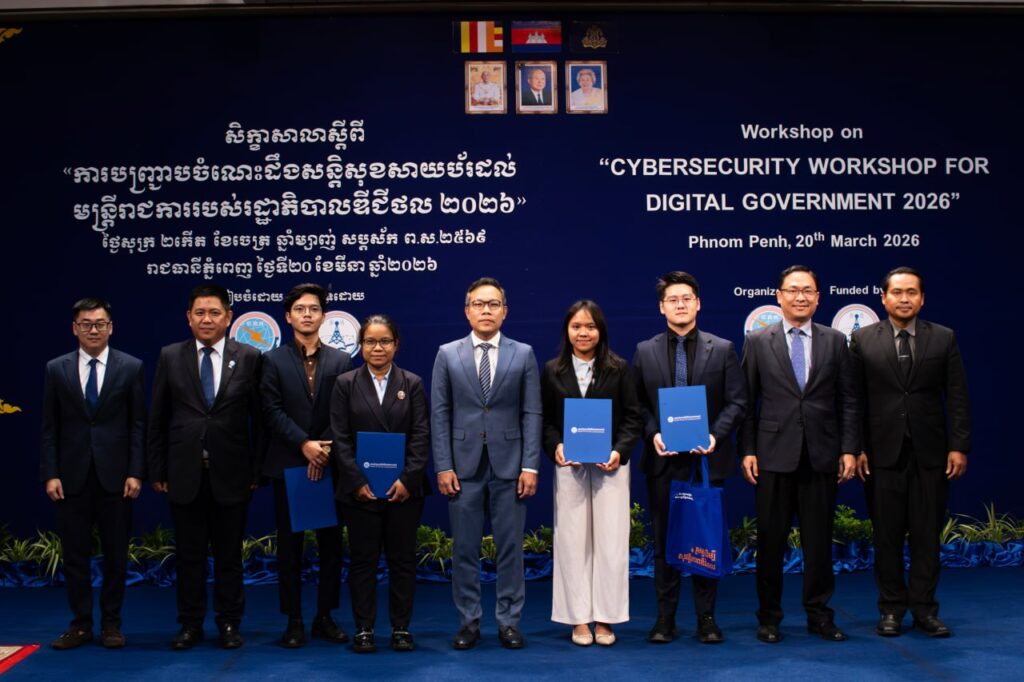
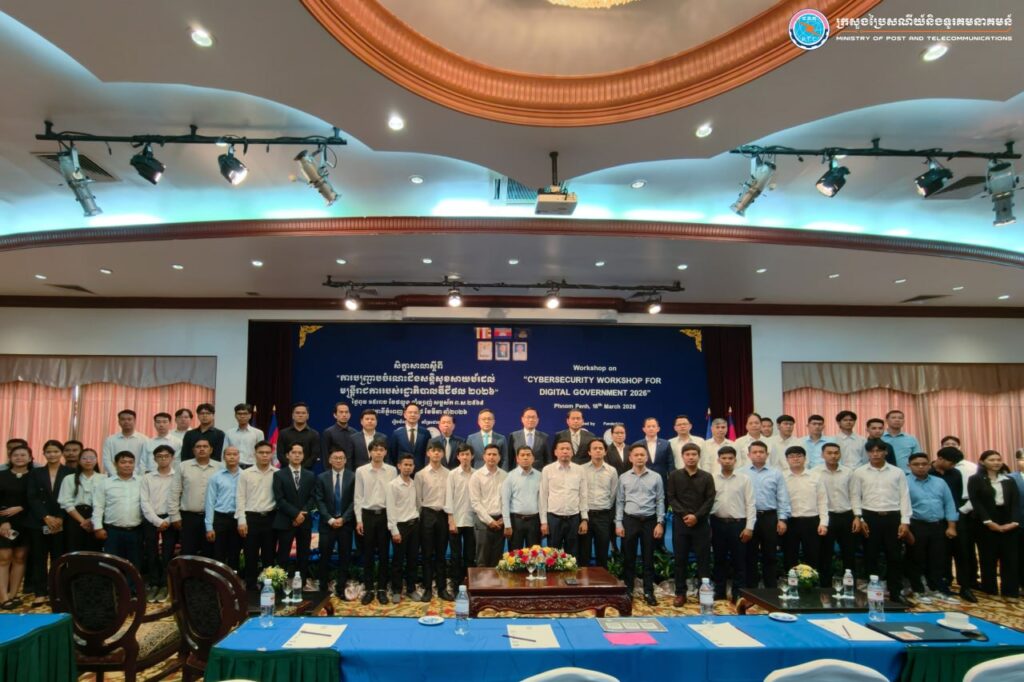
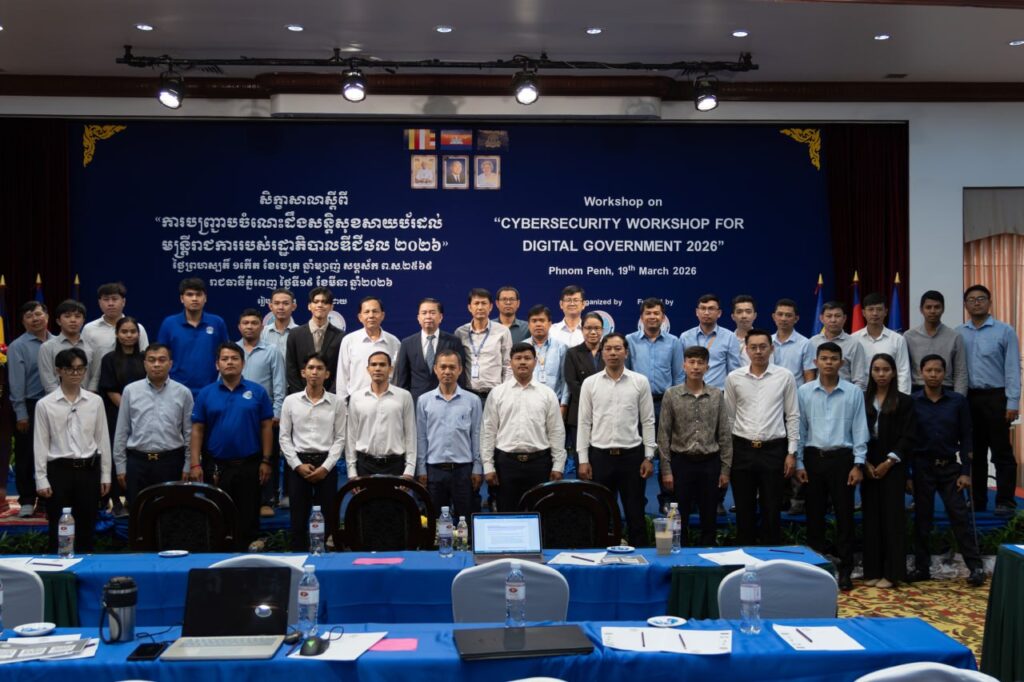
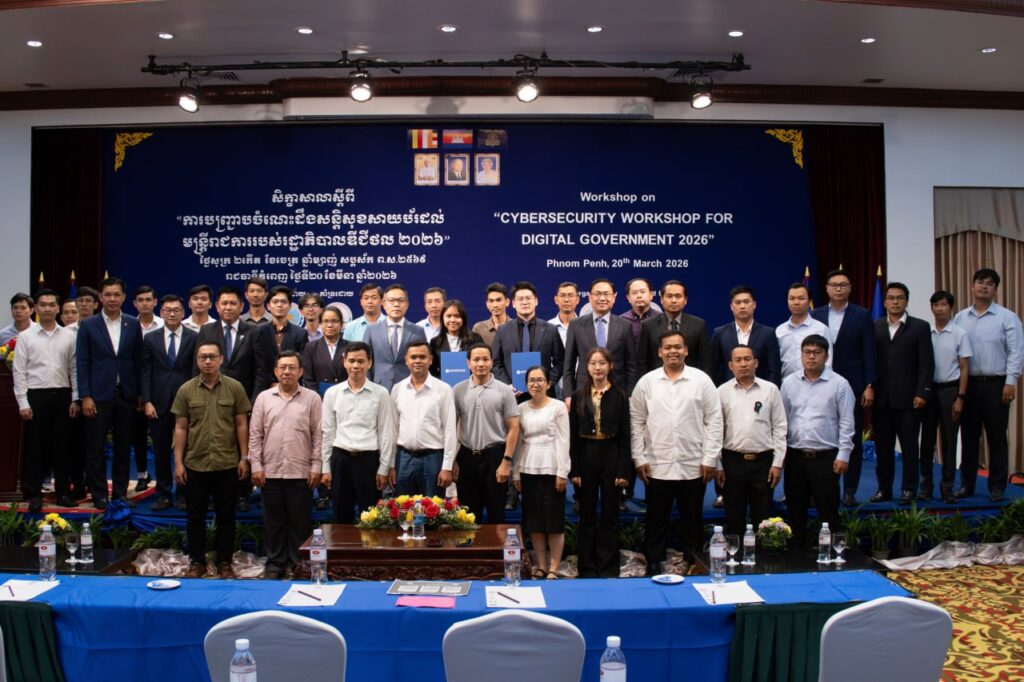
On this occasion, H.E. Secretary of State Liv Sophanarith stated that this workshop demonstrates the MPTC’s proactive role in protecting and addressing the challenges faced by the government, particularly at a time when cybersecurity risks are becoming increasingly complex and have significant implications for national stability and public trust. H.E. Secretary of State emphasized that the rapid development of digital technologies—especially the growing use of artificial intelligence—can have negative impacts, such as AI-powered phishing and deepfakes.
To ensure timely and effective responses, H.E. Secretary of State shared several key insights for considerations, including (1) rising geopolitical tensions in the region that could be exploited to launch cyberattacks; (2) the overreliance on and rapid adoption of artificial intelligence technologies, which may introduce new vulnerabilities; (3) the growing sophistication of cybercriminal capabilities; (4) vulnerabilities within digitally connected supply chains operating across a broader cyber ecosystem; (5) the need to strengthen laws and regulations to enhance cybersecurity resilience; and (6) the importance of developing a larger pool of skilled cybersecurity professionals.
These considerations are particularly significant for Cambodia and align with the Royal Government’s vision outlined in the Digital Economy and Society Policy Framework 2021–2035 and the Digital Government Policy 2022–2035, which aim to respond to the Fourth Industrial Revolution by building digital citizens, digital government, and vibrant digital business.
#posts#telecommunications#digital#MPTC#GoDigitalCambodia#Cambodia