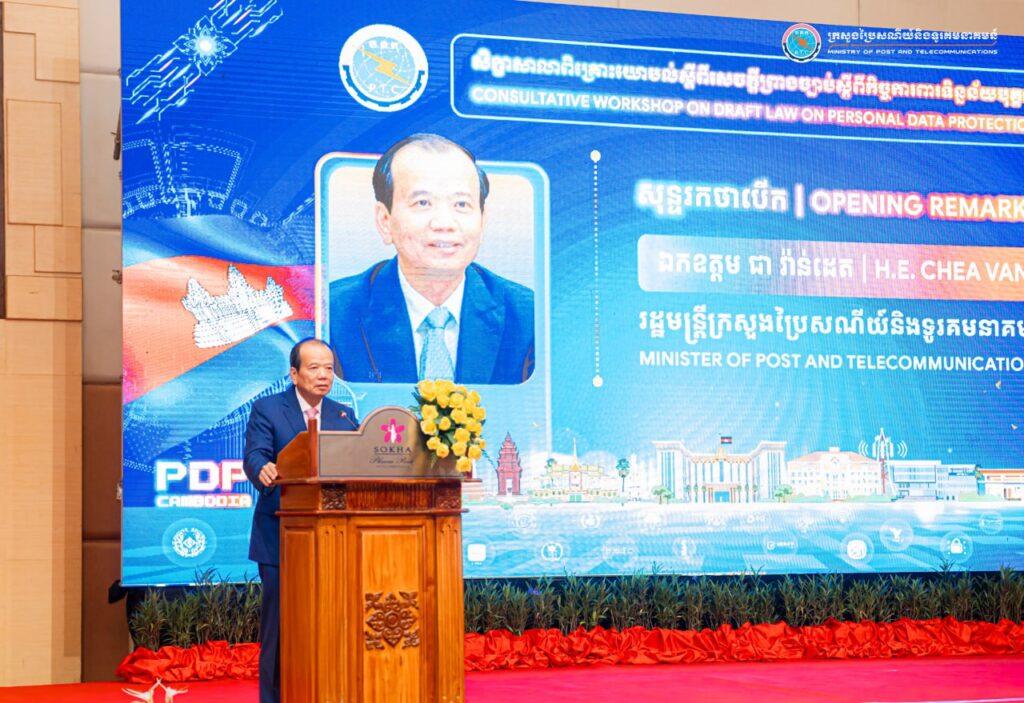
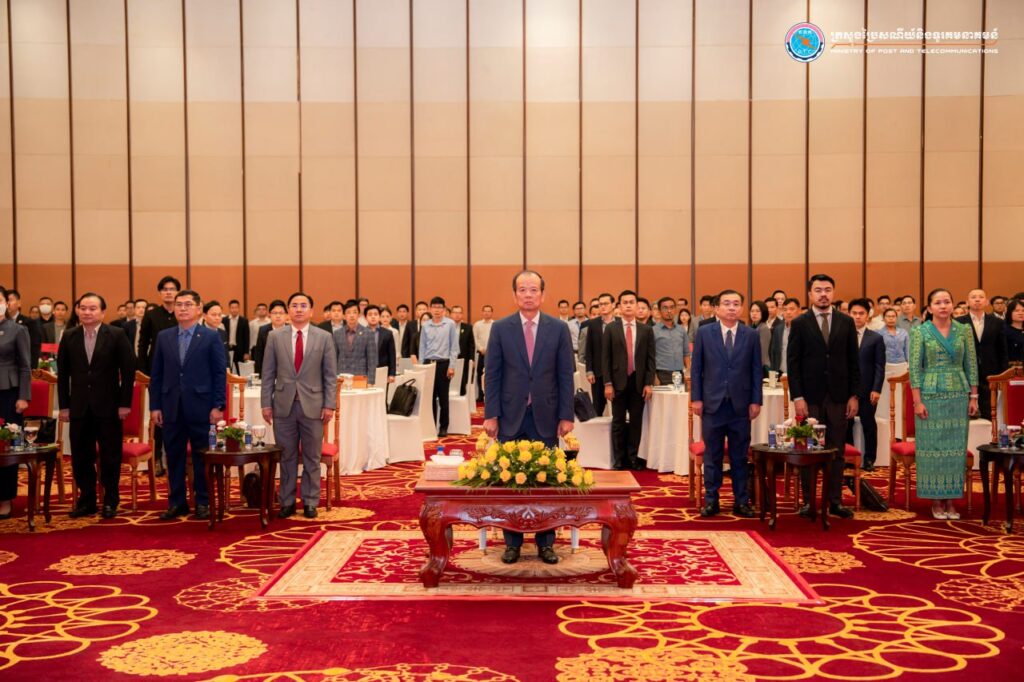
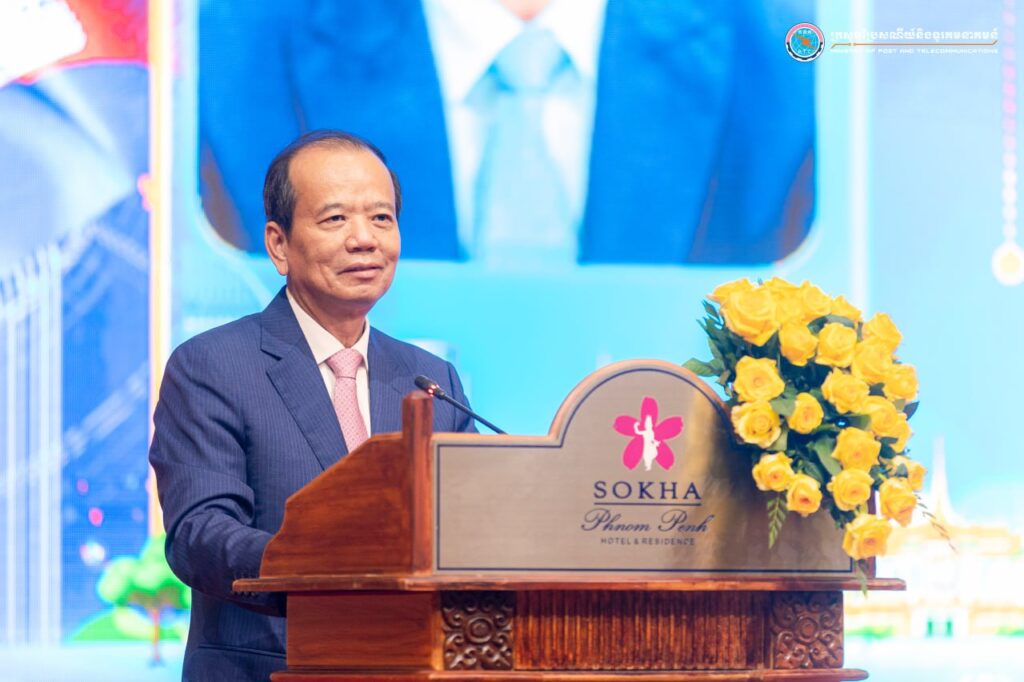
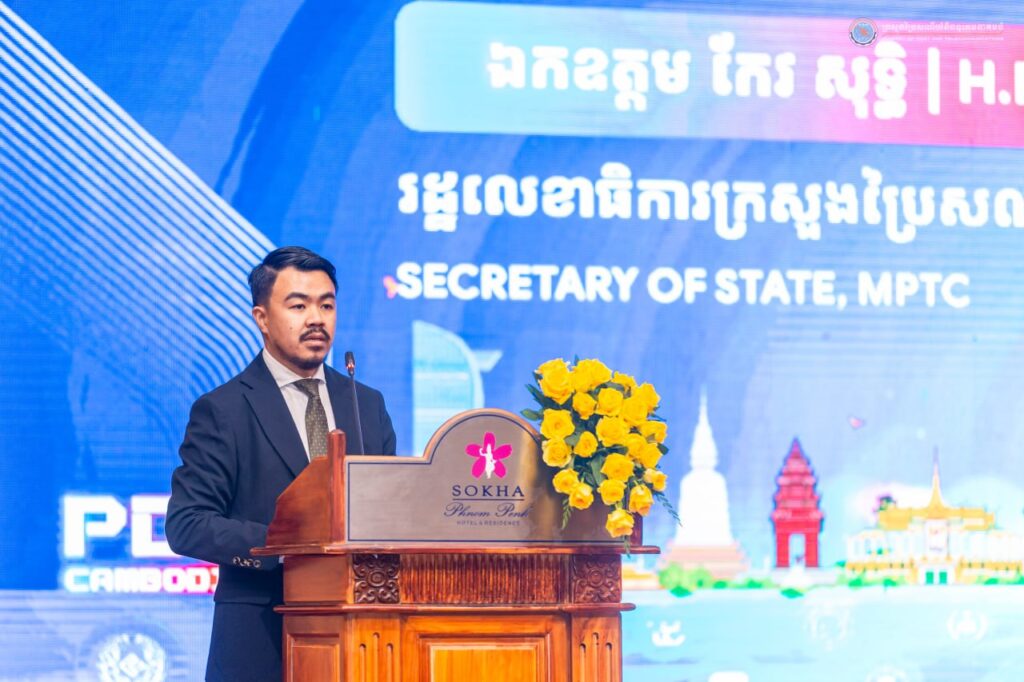
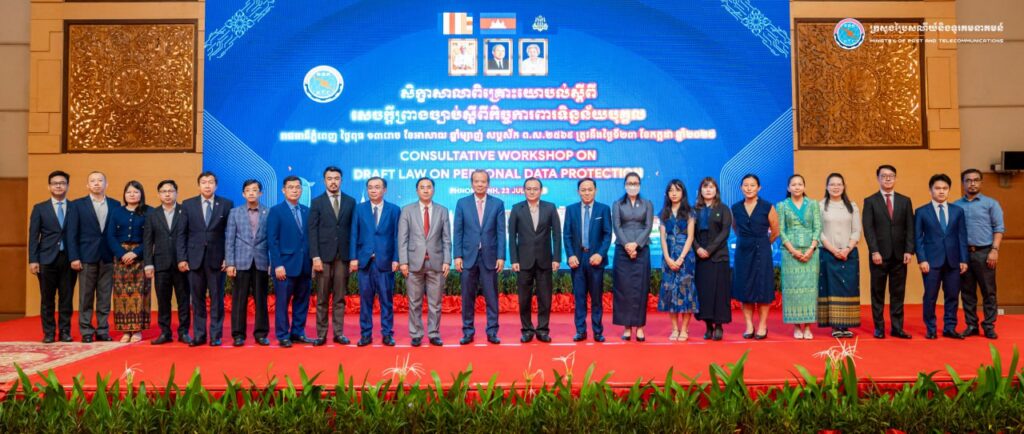
Phnom Penh— On the morning of July 23, 2025, His Excellency Chea Vandeth, Minister of Post and Telecommunications, presided over the opening ceremony of the “Consultative Workshop on the Draft Law on Personal Data Protection,” held at Sokha Phnom Penh Hotel. The workshop brought together approximately 200 participants, including leaders and civil servants from various ministries and institutions, representatives from diplomatic missions, the private sector, business associations, professional freelancers, civil society organizations, development partners, and academic and research institutions.
During the opening ceremony, H.E. Minister Chea Vandeth outlined the importance of the Draft Law on Personal Data Protection. He pointed out that among ASEAN member states, only Cambodia, Myanmar, and Laos have yet to enact such legislation. Therefore, the Ministry of Post and Telecommunications has taken the initiative to draft the law with the goal of finishing it by the end of 2025 or early 2026.
H.E. Minister further emphasized that the Draft Law on Personal Data Protection is based on international legal frameworks and relevant national laws and regulations. The objective is to ensure legal harmonization and effective implementation. During the opening ceremony, H.E. Minister called on all relevant stakeholders and participants to engage actively in the discussions to provide meaningful input to refine its quality and completeness.
Before concluding his remarks, H.E. Minister reiterated that “we must work together to build a culture of personal data protection by processing data responsibly to serve the interests of our citizens, economy, and society, as well as enhance Cambodia’s engagement in international trade aligned with multilateral principles.”
It is worth noting that the primary objective of this consultative workshop was to publicly share the contents of the draft law with relevant stakeholders to ensure transparency, build trust, and promote inclusive participation. It also aimed to gather comprehensive inputs on the draft law in order to identify gaps, inconsistencies, overlaps, and potential impacts. This will help ensure the draft law is comprehensive, legally harmonized, uniform, and ready for ministries and institutions, the private sector, and relevant stakeholders involved in the implementation.